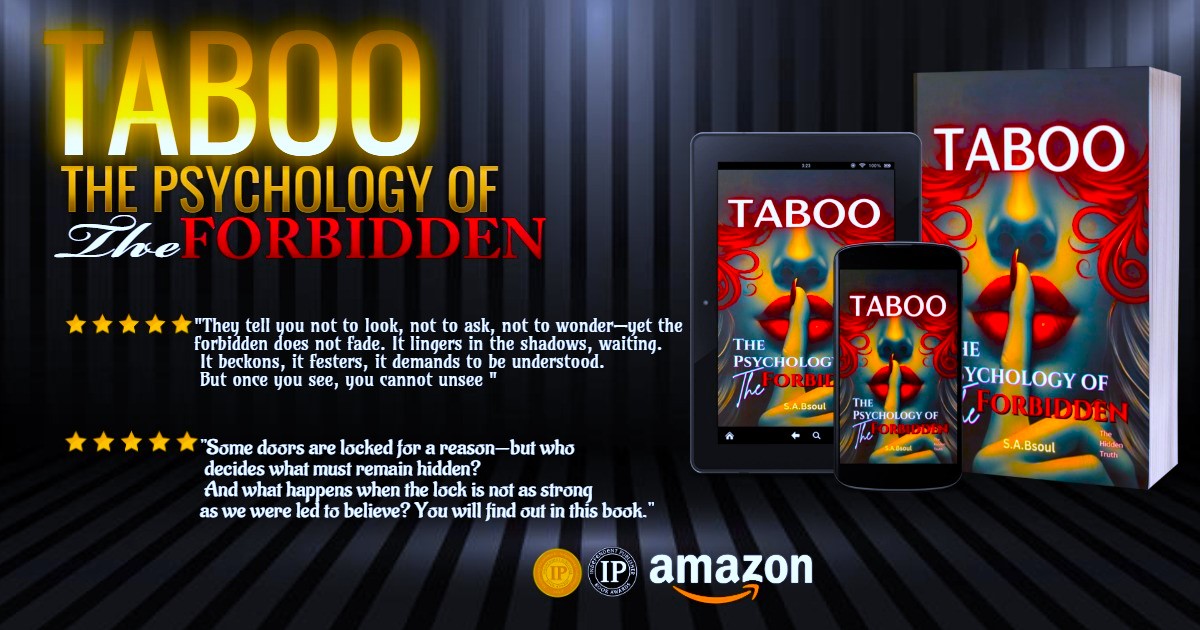
Taboo: The Psychology of the Forbidden
Sami Bsoul, PhD
Taboo 
They tell you not to look. So you look.
They tell you not to ask. So you ask.
They tell you not to touch, not to think, not to wonder, and in that moment, the
forbidden becomes irresistible.
Taboo is not just a set of rules.
It is a whisper in the dark, a locked door with something breathing behind it.
It is the line between what we are told is right and what we secretly crave.
It is the itch that laws, religions, and traditions try to scratch out of existence, only for it to grow back stronger.
But why? Why do some ideas, actions, and desires get buried beneath centuries of silence? Who decides what must not be spoken? And more importantly, why are we so drawn to it?
This book is not a map of morality. It is not here to judge. It is here to unveil, to unearth, to unravel the hidden forces that shape our fears, our desires, our shame.
Taboos are not fixed; they shift like shadows, changing from one era to the next, from one culture to another. What was once forbidden becomes mundane. What is unthinkable today may be tomorrow’s norm.
From the sacred to the profane, from ancient rituals to modern obsessions, we will descend into the origins of taboo. We will explore why certain acts provoke disgust, why some ideas spark rebellion, why shame and guilt grip us even when no one is watching.
We will examine why sex, power, and violence are so deeply entangled with the forbidden. And we will question everything, because to question is to confront the edges of control.
But be warned. Once you begin to see the architecture of taboo, how it is built, who enforces it, and why it crumbles, you cannot unsee it. You cannot unknow what has been buried.
This book is not for those who shy away from discomfort. It is for those who dare to question, to explore, and to confront the edges of what we call forbidden.
So, if you are ready, truly ready, turn the page.
The forbidden awaits.
This book dares to explore the unspoken, the forbidden, and the deeply hidden. It answers the questions you’ve been too afraid to ask, and uncovers the ones you never thought to question.
From the origins of taboo to the psychology of forbidden desires, from the power of shame to the allure of rebellion, this book delves into the mysteries that shape who we are.
It replies to the following questions, and more:
What if the things we call "taboo" are the keys to understanding who we truly are?
Why does the forbidden feel so irresistible, even when we know it’s dangerous?
Why are sexual taboos so powerful?
What lies behind the locked doors of our deepest, most hidden desires?
How do sexual taboos differ across cultures?
Why do taboos surround the very things that make us human, sex, death, and power?
Are taboos universal or cultural?
What if the forbidden is not wrong, but simply misunderstood?
Why do we fear what we don’t understand, and why do we forbid what we fear?
What are the most common sexual taboos?
What if the most dangerous thing about taboos is not breaking them, but blindly obeying them?
Why do we feel shame for desires that feel as natural as breathing?
Why do people break sexual taboos?
What if the things we call "sinful" are the same things that set us free?
Why do taboos exist in every culture, yet no two cultures agree on what’s forbidden?
How do sexual taboos affect relationships?
What if the forbidden is not the exception, but the rule?
Why do we punish those who dare to cross the line, even as we secretly envy their courage?
Why are some sexual practices considered taboo?
What if the things we’re told to avoid are the very things that could heal us?
Why do taboos thrive in the shadows, and what happens when we bring them into the light?
How do sexual taboos influence identity?
What if the forbidden is not a boundary, but a mirror reflecting our deepest fears?
Why do we create rules to suppress what we cannot control?
How do sexual taboos impact mental health?
What if the most dangerous taboos are the ones we don’t even recognize?
Why do we feel both disgust and fascination when confronted with the forbidden?
What if the things we call "unnatural" are the most natural parts of being human?
Why do we forbid what we cannot explain, and why do we fear what we cannot name?
What if the forbidden is not a limit, but a gateway to something greater?
Why do we cling to taboos, even when they hurt us?
What if the things we’re told to hide are the things that could unite us?
Why do we punish curiosity, even though it’s the force that drives us forward?
What if the forbidden is not the problem, but the solution?
Why do we fear the unknown, and why do we forbid what lies beyond it?
How do taboos change over time?
What are the most common taboos worldwide?
Why do some taboos persist while others fade?
What is the purpose of taboos?
Why are humans fascinated by taboos?
What is the psychology behind forbidden desires?
How do taboos affect the human mind?
Why do people feel shame about taboos?
How do taboos influence behaviour?
What happens when someone breaks a taboo?
Why do people secretly crave what is forbidden?
How do taboos affect mental health?
Why do taboos provoke such strong emotions?
What is the role of curiosity in breaking taboos?
Cultural and Societal Questions About Taboos
How do different cultures define taboos?
What are some examples of cultural taboos?
How do taboos vary across religions?
Why are some taboos considered worse than others?
How do taboos influence traditions and rituals?
What role do taboos play in maintaining social order?
How do taboos affect gender roles?
How do taboos impact relationships?
How do taboos shape art, literature, and media?
How do taboos affect politics and power dynamics?
Why are incest taboos universal?
How do religions enforce taboos?
Why are some foods considered taboo in religion?
How do taboos shape religious rituals?
What happens when someone breaks a religious taboo?
How do spiritual taboos differ from cultural taboos?
Why are certain words or actions taboo in religion?
How do taboos affect religious identity?
How do taboos influence morality in religion?
Why do some religious taboos persist for centuries?
Why do people have forbidden thoughts?
How do forbidden desires develop?
What are the most common forbidden desires?
Why do people feel guilty about forbidden thoughts?
How do forbidden thoughts affect behavior?
Why are some thoughts considered taboo?
How do people cope with forbidden desires?
What is the psychology behind forbidden fantasies?
Why do people act on forbidden desires?
How do forbidden thoughts impact mental health?
What happens when someone breaks a taboo?
How do societies punish taboo-breaking?
What are the consequences of breaking a taboo?
Can breaking taboos be liberating?
How do people justify breaking taboos?
What are examples of famous taboo-breaking moments?
How do taboos evolve after they are broken?
Why do some people enjoy breaking taboos?
How does breaking a taboo affect relationships?
Are taboos inherently moral or immoral?
Why do taboos provoke moral outrage?
How do taboos influence ethical decisions?
What is the relationship between taboos and guilt?
How do taboos affect personal values?
Why do some taboos feel morally wrong?
How do taboos challenge moral boundaries?
Can taboos be morally justified?
How do taboos influence societal ethics?
How do taboos exist in modern society?
How have taboos changed in the 21st century?
Why are some taboos disappearing?
How do taboos affect social media and technology?
What are the new taboos of today?
How do taboos influence modern relationships?
How do taboos impact modern art and entertainment?
Why are some taboos still relevant today?
How do taboos affect modern mental health?
How do taboos shape personal identity?
Why do people feel defined by taboos?
How do taboos affect gender identity?
How do taboos influence sexual identity?
Why do some people embrace taboo identities?
How do taboos affect cultural identity?
How do taboos impact self-expression?
Why do people hide taboo aspects of their identity?
How do taboos influence group identity?
How do taboos affect individuality?
How do taboos reinforce power structures?
Why do those in power create taboos?
How do taboos control marginalized groups?
How do taboos affect political systems?
Why are some taboos used as tools of oppression?
How do taboos influence authority?
How do taboos shape hierarchies?
Why do taboos protect those in power?
How do taboos affect social justice movements?
How do taboos challenge power dynamics?
How do taboos create fear of the unknown?
Why are people afraid of breaking taboos?
How do taboos exploit human fears?
Why do taboos surround death and the afterlife?
How do taboos influence fear of the "other"?
Why are some taboos rooted in superstition?
How do taboos affect fear of change?
Why do taboos create fear of judgment?
How do taboos shape fear of the forbidden?
How does shame enforce taboos?
Why do people feel ashamed of taboo desires?
How do taboos affect self-esteem?
How do taboos influence feelings of inadequacy?
Why do people hide taboo actions out of shame?
How do taboos perpetuate cycles of shame?
Why are some taboos tied to body image?
How do taboos affect emotional well-being?
Why do societies punish what they secretly crave?
What if taboos are not rules to follow, but traps to escape?
Why do we feel most alive when we’re closest to breaking the rules?
What if the things we’re told not to think about are the things we need to understand most?
© Samibsoul.com 2025
2023 Samibsoul.com ©