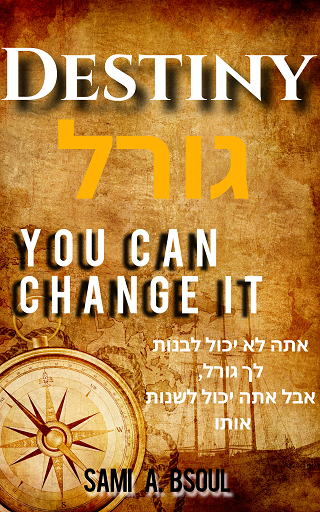
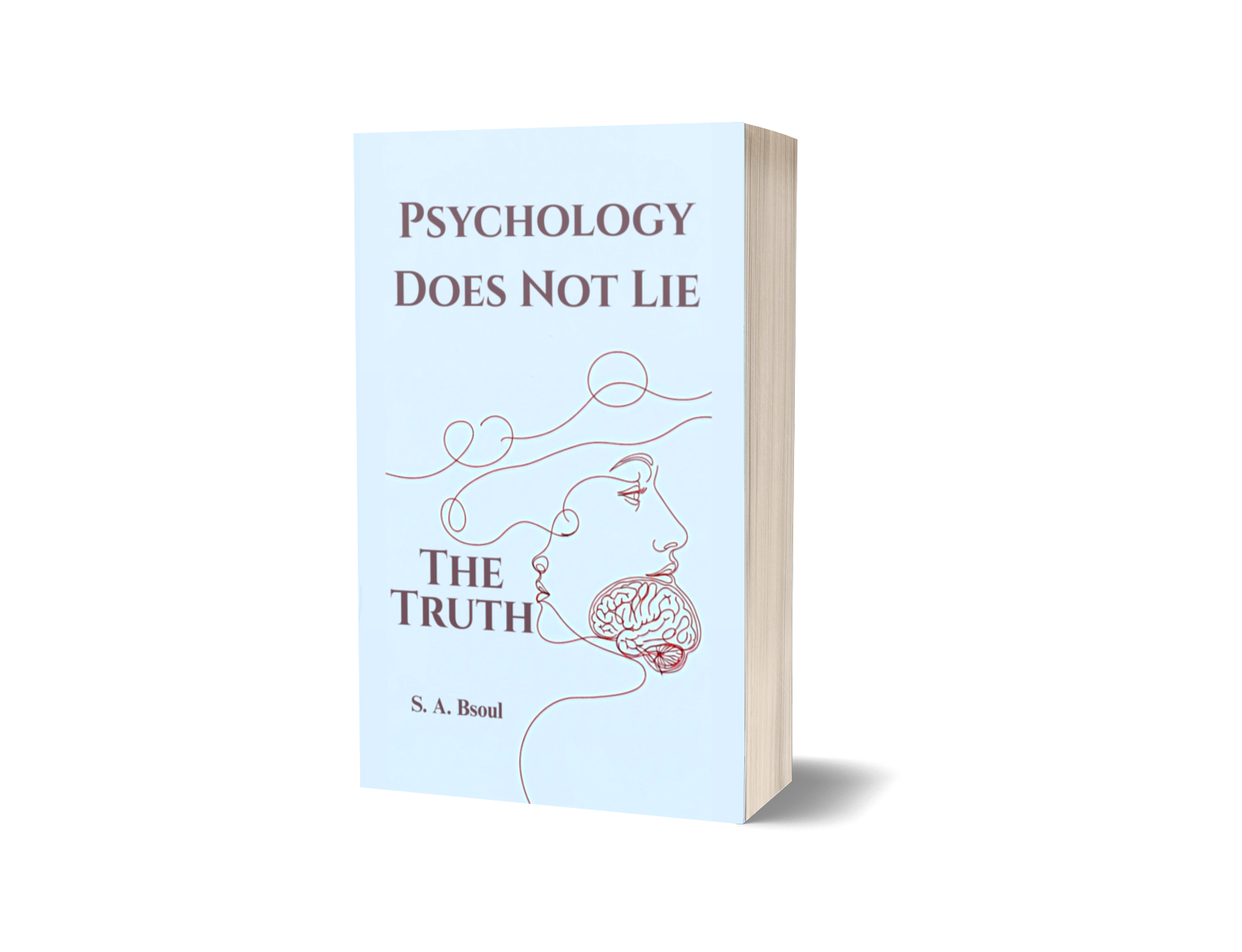
Psychology Does Not Lie: The Truth
''Psychology Does Not Lie: The Truth'' It names what was done to you. It names what you did to survive. It shows you the difference between who you are and who you became around people who could not hold you. And then it gives you back yourself.
This book is for you.
But if you see someone really dear to you in every chapter, do not tell them they need it.
Just leave it where they could find it.
What feels obvious now wasn’t visible then. The brain doesn’t learn through advice, it learns through experience. That’s why most clarity comes after the damage is already done. Clarity rarely comes before the mistake. It comes from it. You only see it clearly now because you already went through what it cost you. You don’t miss the signs because you’re blind. You miss them because you haven’t learned them yet. And the brain usually learns… after it pays for it. #psychologydoesnotlie
@sami.bsoul What feels obvious now wasn’t visible then. The brain doesn’t learn through advice, it learns through experience. That’s why most clarity comes after the damage is already done. Clarity rarely comes before the mistake. It comes from it. You only see it clearly now because you already went through what it cost you. You don’t miss the signs because you’re blind. You miss them because you haven’t learned them yet. And the brain usually learns… after it pays for it. #psychologydoesnotlie ♬ original sound - Sami Bsoul
Don’t Bullshit an Emotionally Intelligent Person. #psychologydoesnotlie
@sami.bsoul Don’t Bullshit an Emotionally Intelligent Person. #psychologydoesnotlie ♬ original sound - Sami Bsoul
Emotional processing often happens before cognitive understanding. The brain can register mismatch or discomfort before it can explain it. The brain detects patterns and inconsistencies faster than it can verbalize them. That’s why something can stop feeling right long before you’re able to clearly say why.#psychologydoesnotlie
@sami.bsoul Emotional processing often happens before cognitive understanding. The brain can register mismatch or discomfort before it can explain it. The brain detects patterns and inconsistencies faster than it can verbalize them. That’s why something can stop feeling right long before you’re able to clearly say why.#psychologydoesnotlie ♬ original sound - Sami Bsoul
Attraction is mediated by the anterior cingulate cortex and insula, brain regions that process safety, predictability, and emotional stability. Your face gets attention. Your nervous system keeps it. People subconsciously choose partners who signal low threat and high reliability. That's not shallow. Attraction is safety detection, not beauty contests. #psychologydoesnotlie
@sami.bsoul Attraction is mediated by the anterior cingulate cortex and insula, brain regions that process safety, predictability, and emotional stability. Your face gets attention. Your nervous system keeps it. People subconsciously choose partners who signal low threat and high reliability. That's not shallow. Attraction is safety detection, not beauty contests. #psychologydoesnotlie ♬ original sound - Sami Bsoul
When the brain gets used to stress, it starts treating it as normal. It adapts to what it experiences most. If chaos is repeated, it becomes the baseline. Over time, calm doesn’t feel safe, it feels unfamiliar. And unfamiliar states are often misread as something being wrong, even when nothing is. Familiar doesn’t mean safe. It just means practiced.#psychologydoesnotlie
@sami.bsoul When the brain gets used to stress, it starts treating it as normal. It adapts to what it experiences most. If chaos is repeated, it becomes the baseline. Over time, calm doesn’t feel safe, it feels unfamiliar. And unfamiliar states are often misread as something being wrong, even when nothing is. Familiar doesn’t mean safe. It just means practiced.#psychologydoesnotlie ♬ original sound - Sami Bsoul
People rarely stay because they don’t see the problem. They stay because the nervous system learns to tolerate it. What starts as resistance slowly becomes familiar, and familiar is easy to mistake for safe. What feels like confusion is often attachment mixed with hope. Over time, people don’t stay because things improve. They stay because they adapt. And adaptation can feel like acceptance, even when nothing has really changed. The hardest part about unhealthy relationships isn’t leaving. It’s how slowly they become normal. The mind adjusts, the body quiets down, and what once felt wrong starts to feel expected.#psychologydoesnotlie
@sami.bsoul People rarely stay because they don’t see the problem. They stay because the nervous system learns to tolerate it. What starts as resistance slowly becomes familiar, and familiar is easy to mistake for safe. What feels like confusion is often attachment mixed with hope. Over time, people don’t stay because things improve. They stay because they adapt. And adaptation can feel like acceptance, even when nothing has really changed. The hardest part about unhealthy relationships isn’t leaving. It’s how slowly they become normal. The mind adjusts, the body quiets down, and what once felt wrong starts to feel expected.#psychologydoesnotlie ♬ original sound - Sami Bsoul
What you call ‘built differently’ is often a nervous system shaped by experience. You notice more, think longer, and need more space to reset. And after pain, you didn’t become bitter. You became selective. That’s not damage. That’s adaptation.#psychologydoesnotlie
@sami.bsoul What you call ‘built differently’ is often a nervous system shaped by experience. You notice more, think longer, and need more space to reset. And after pain, you didn’t become bitter. You became selective. That’s not damage. That’s adaptation.#psychologydoesnotlie ♬ original sound - Sami Bsoul
Narcissistic personality dynamics often involve a grandiose false self that requires constant external validation (narcissistic supply). An enemy or villain serves as a negative reference point, someone to devalue so the false self feels superior. This is a shame‑avoidance mechanism. Withdraw your engagement, and you remove the supply and the contrast. What's left is the true self: empty, inadequate, and unbearable to face. #psychologydoesnotlie
@sami.bsoul Narcissistic personality dynamics often involve a grandiose false self that requires constant external validation (narcissistic supply). An enemy or villain serves as a negative reference point, someone to devalue so the false self feels superior. This is a shame‑avoidance mechanism. Withdraw your engagement, and you remove the supply and the contrast. What's left is the true self: empty, inadequate, and unbearable to face. #psychologydoesnotlie ♬ original sound - Sami Bsoul
These behaviours fall under covert aggression, manipulation that looks socially acceptable on the surface. The harm isn’t loud. It’s cumulative. Over time, you stop trusting your own feelings. That’s the goal, even if the toxic person doesn’t know it. Quiet toxic behaviours don’t look like abuse. They look like “just helping” or “just joking.” But they’ll make you question yourself more than any fight ever will.#psychologydoesnotlie
@sami.bsoul These behaviours fall under covert aggression, manipulation that looks socially acceptable on the surface. The harm isn’t loud. It’s cumulative. Over time, you stop trusting your own feelings. That’s the goal, even if the toxic person doesn’t know it. Quiet toxic behaviours don’t look like abuse. They look like “just helping” or “just joking.” But they’ll make you question yourself more than any fight ever will.#psychologydoesnotlie ♬ original sound - Sami Bsoul
Money triggers status anxiety, a nervous system threat response when you perceive someone as higher in social hierarchy. Regulated people don't engage in that comparison at all. Their self-worth isn't tied to relative wealth. That's not arrogance. That's nervous system differentiation. Money only has power over you if your nervous system gives it power. Regulated people don't bow to numbers. Notice who makes you shrink. That’s your work.#psychologydoesnotlie
@sami.bsoul Money triggers status anxiety, a nervous system threat response when you perceive someone as higher in social hierarchy. Regulated people don't engage in that comparison at all. Their self-worth isn't tied to relative wealth. That's not arrogance. That's nervous system differentiation. Money only has power over you if your nervous system gives it power. Regulated people don't bow to numbers. Notice who makes you shrink. That’s your work.#psychologydoesnotlie ♬ original sound - Sami Bsoul
Emotional contagion, social mimicry, and mirror neurons are well-documented phenomena: the moods, behaviours, and stress levels of those around us literally shape our own internal state. Prolonged exposure to a toxic environment, whether a workplace, a city, or a relationship, can rewire your baseline emotional tone. You may hate what they do, but your nervous system learns from them anyway. The question isn’t just who you’re with, but who you’re becoming while you’re there. Choose your air. From ''Psychology Does Not Lie: The Truth''
@sami.bsoul Emotional contagion, social mimicry, and mirror neurons are well-documented phenomena: the moods, behaviours, and stress levels of those around us literally shape our own internal state. Prolonged exposure to a toxic environment, whether a workplace, a city, or a relationship, can rewire your baseline emotional tone. You may hate what they do, but your nervous system learns from them anyway. The question isn’t just who you’re with, but who you’re becoming while you’re there. Choose your air. From ''Psychology Does Not Lie: The Truth'' #psychologydoesnotlie ♬ original sound - Sami Bsoul
Parentification is a recognized developmental phenomenon where a child takes on adult responsibilities, emotional, practical, or relational, beyond their developmental capacity. It often occurs in families where one or both parents are emotionally unavailable, overwhelmed, or rely on the child for stability. Research shows that parentified children grow into adults who struggle with boundaries, feel guilty when not caretaking, and often confuse exhaustion with self-worth. This is not a character flaw. It is a learned survival strategy. But survival strategies that kept you safe then can keep you stuck now. Healing means renegotiating the contract: you are allowed to exist without being useful. You are allowed to receive without giving back. You are allowed to be here simply because you are.
@sami.bsoul Parentification is a recognized developmental phenomenon where a child takes on adult responsibilities, emotional, practical, or relational, beyond their developmental capacity. It often occurs in families where one or both parents are emotionally unavailable, overwhelmed, or rely on the child for stability. Research shows that parentified children grow into adults who struggle with boundaries, feel guilty when not caretaking, and often confuse exhaustion with self-worth. This is not a character flaw. It is a learned survival strategy. But survival strategies that kept you safe then can keep you stuck now. Healing means renegotiating the contract: you are allowed to exist without being useful. You are allowed to receive without giving back. You are allowed to be here simply because you are. #psychologydoesnotlie ♬ original sound - Sami Bsoul
Decades of attachment research confirm what these children are saying: emotional attunement is not a luxury, it’s a biological necessity. A child whose physical needs are met but whose emotional world is ignored grows up with a fractured understanding of safety. This is often called good enough parenting, but when emotional neglect coexists with material provision, the child learns that love is conditional on performance, and that their inner life is invisible. Psychologists refer to this as emotional neglect, a form of maltreatment that leaves no physical marks but shapes the architecture of the brain. Without a caregiver who consistently mirrors, soothes, and validates feelings, a child fails to develop a secure base. They grow into adults who apologize for their emotions, equate closeness with unreliability, and feel guilty for wanting comfort. The pain of being provided for but not attuned to creates a specific kind of loneliness: one that feels unjustified because there was no overt abuse, yet the absence of emotional safety is profound. Research on invisible wounds shows that this form of neglect often results in difficulty with trust, emotional regulation, and self-compassion, precisely because the child learned that their feelings were an inconvenience to the very people who kept them alive. These lines are not poetic exaggeration. They are the lived reality of attachment trauma, confirmed by neurobiology, developmental science, and decades of clinical observation.
@sami.bsoul Decades of attachment research confirm what these children are saying: emotional attunement is not a luxury, it’s a biological necessity. A child whose physical needs are met but whose emotional world is ignored grows up with a fractured understanding of safety. This is often called good enough parenting, but when emotional neglect coexists with material provision, the child learns that love is conditional on performance, and that their inner life is invisible. Psychologists refer to this as emotional neglect, a form of maltreatment that leaves no physical marks but shapes the architecture of the brain. Without a caregiver who consistently mirrors, soothes, and validates feelings, a child fails to develop a secure base. They grow into adults who apologize for their emotions, equate closeness with unreliability, and feel guilty for wanting comfort. The pain of being provided for but not attuned to creates a specific kind of loneliness: one that feels unjustified because there was no overt abuse, yet the absence of emotional safety is profound. Research on invisible wounds shows that this form of neglect often results in difficulty with trust, emotional regulation, and self-compassion, precisely because the child learned that their feelings were an inconvenience to the very people who kept them alive. These lines are not poetic exaggeration. They are the lived reality of attachment trauma, confirmed by neurobiology, developmental science, and decades of clinical observation. #psychologydoesnotlie ♬ original sound - Sami Bsoul
@sami.bsoul Stop waiting for people to give what they don't have. Start giving yourself what you actually deserve. https://www.amazon.com/dp/B0GGYQLSHZ #psychologydoesnotlie ♬ original sound - Sami Bsoul
@sami.bsoul They're not confused about you. They're just convinced. They've already voted. Stop testifying. Let them be right about the version of you they invented. You go be real somewhere else.#psychologydoesnotlie ♬ original sound - Sami Bsoul
@sami.bsoul Reading from "Psychology Does Not Lie: The Truth". They don't want to improve you. They want to make you need them. Don't forget who you were before they showed up.#psychologydoesnotlie ♬ original sound - Sami Bsoul
@sami.bsoul People who need you to earn love will never stop moving the price. Being chosen is not the same as being valued. Some people only keep you around while you are trying to earn them. Love that only shows up when you're perfect? It's not love.#psychologydoesnotlie ♬ original sound - Sami Bsoul
@sami.bsoul You don't lose people by having boundaries. You lose the ones who needed you to have none. And that's not loss. That's selection.#psychologydoesnotlie ♬ original sound - Sami Bsoul
@sami.bsoul A relationship cannot regulate what you refuse to calm yourself. It cannot fill what you bring empty. It cannot survive as a rescue mission. Two whole people choose each other. Two broken people just hold each other down. #psychologydoesnotlie ♬ original sound - Sami Bsoul
@sami.bsoul You absorb blame because it gives you the illusion of control. If it is your fault, maybe you can fix it. The brain prefers self-blame over helplessness, even when self-blame is inaccurate. But here's the truth: someone's inability to love becomes painful only when you interpret it as proof that you are hard to love. People reveal their emotional range by how they treat you, not your worth. Being undervalued by someone incapable of valuing is not a measurement. It is a mismatch. When someone cannot tolerate closeness, distance becomes their language, not your failure. You cannot earn warmth from a person committed to emotional winter. Confusing poor treatment with personal defect is how pain becomes identity. You were not asking for too much. You were asking the wrong person. The way they treat you is never about who you are. It is about who they are. You cannot measure your depth by someone who only knows shallow. So the question isn't "what's wrong with you?" The question is "what's missing in them?"#psychologydoesnotlie ♬ original sound - Sami Bsoul
@sami.bsoul You do not grow by shrinking for others. You grow by expanding into spaces no one else can inhabit for you. You will outgrow rooms, cities, relationships, roles, even yourself. That is how a soul stretches. Some people will cheer for your growth while you change. Others will try to chain you to yesterday. Neither reaction defines you.#psychologydoesnotlie ♬ original sound - Sami Bsoul
You're not chasing love. You're chasing a do‑over. You’re trying to force the past to apologize through someone who wasn’t there. You keep replaying the same relationship, the same fight, the same ending, different face, same wound. That’s not bad luck. That’s repetition compulsion: the unconscious drive to recreate early trauma in an attempt to master it. The game ended years ago. You can stop playing.
@sami.bsoul You're not chasing love. You're chasing a do‑over. You’re trying to force the past to apologize through someone who wasn’t there. You keep replaying the same relationship, the same fight, the same ending, different face, same wound. That’s not bad luck. That’s repetition compulsion: the unconscious drive to recreate early trauma in an attempt to master it. The game ended years ago. You can stop playing. #psychologydoesnotlie ♬ original sound - Sami Bsoul
Enmeshment is a relational pattern where boundaries dissolve. You stop knowing where you end and they begin. Their emotions become yours. Their needs become your job. Your identity becomes an extension of someone else. Psychologists call this fusion, not connection. It often forms in families where differentiation is mistaken for rejection, and it repeats in relationships where love is confused with absorption. The research is clear: healthy intimacy requires two whole people. Real love doesn't ask you to disappear. It asks you to show up, separate, complete, and still choosing each other. If you’ve ever given up pieces of yourself to keep a connection, you weren’t loving. You were surviving enmeshment. Recognizing it is the first step back to yourself.
@sami.bsoul Enmeshment is a relational pattern where boundaries dissolve. You stop knowing where you end and they begin. Their emotions become yours. Their needs become your job. Your identity becomes an extension of someone else. Psychologists call this fusion, not connection. It often forms in families where differentiation is mistaken for rejection, and it repeats in relationships where love is confused with absorption. The research is clear: healthy intimacy requires two whole people. Real love doesn't ask you to disappear. It asks you to show up, separate, complete, and still choosing each other. If you’ve ever given up pieces of yourself to keep a connection, you weren’t loving. You were surviving enmeshment. Recognizing it is the first step back to yourself.#psychologydoesnotlie ♬ original sound - Sami Bsoul
Transgenerational transmission is a well‑documented phenomenon: unresolved dreams, fears, and expectations pass unconsciously from one generation to the next. You inherit not only traits but also a script, the career you “should” pursue, the milestones you “should” hit, the version of success decided before you were born. When this pattern continues into adult relationships, a partner’s expectations can take the place of family’s, and you end up living a life designed by others. Psychologists call this the unlived life, a life lived in service of what someone else needed you to be. Whether inherited from family or absorbed from a partner, the result is the same: a life that isn’t yours. The path to wholeness isn’t finishing their story. It’s separating what belongs to them from what belongs to you. You are not obligated to complete a script you never wrote. Differentiation, the ability to be yourself while remaining connected, is the foundation of psychological health. The moment you reclaim your own life, you stop being a character in someone else’s story.
@sami.bsoul Transgenerational transmission is a well‑documented phenomenon: unresolved dreams, fears, and expectations pass unconsciously from one generation to the next. You inherit not only traits but also a script, the career you “should” pursue, the milestones you “should” hit, the version of success decided before you were born. When this pattern continues into adult relationships, a partner’s expectations can take the place of family’s, and you end up living a life designed by others. Psychologists call this the unlived life, a life lived in service of what someone else needed you to be. Whether inherited from family or absorbed from a partner, the result is the same: a life that isn’t yours. The path to wholeness isn’t finishing their story. It’s separating what belongs to them from what belongs to you. You are not obligated to complete a script you never wrote. Differentiation, the ability to be yourself while remaining connected, is the foundation of psychological health. The moment you reclaim your own life, you stop being a character in someone else’s story.#psychologydoesnotlie ♬ original sound - Sami Bsoul
Your old version was killed by a thousand small cuts they called "not a big deal." But it didn't die. It just stopped bleeding for people who stacked the bricks, one small cut at a time.
@sami.bsoul You should only need one version of yourself. But some people don't leave you a choice. There's a version of you that doesn't forgive, doesn't explain, doesn't wait. They're about to meet that version. And they'll wonder where the other you went. You already know that version was killed by a thousand small cuts they called "not a big deal." But it didn't die. It just stopped bleeding for people who never brought bandages. #psychologydoesnotlie ♬ original sound - Sami Bsoul
Cognitive dissonance explains it: when the truth threatens someone’s self-image, they’ll reject it, not because it’s false, but because accepting it would require them to change. You cannot force someone to want to see clearly. But you can stop exhausting yourself in the dark.
@sami.bsoul Cognitive dissonance explains it: when the truth threatens someone’s self-image, they’ll reject it—not because it’s false, but because accepting it would require them to change. You cannot force someone to want to see clearly. But you can stop exhausting yourself in the dark.#psychologydoesnotlie ♬ original sound - Sami Bsoul
Psychological research distinguishes loneliness, the distress of perceived social isolation, from solitude, which is a chosen, restorative state. Being alone becomes healing when it’s a return to yourself, not an absence of others. Fake company, relationships that drain without connecting, costs more than being alone ever will. Solitude isn’t emptiness. It’s the room you clear so you can finally hear yourself think.
@sami.bsoul Psychological research distinguishes loneliness, the distress of perceived social isolation, from solitude, which is a chosen, restorative state. Being alone becomes healing when it’s a return to yourself, not an absence of others. Fake company, relationships that drain without connecting, costs more than being alone ever will. Solitude isn’t emptiness. It’s the room you clear so you can finally hear yourself think. #psychologydoesnotlie ♬ original sound - Sami Bsoul
@sami.bsoul You kept showing up with your whole heart. They kept showing up with an empty one. The distance they created? Often it reflects fear of intimacy more than lack of attraction or care. When someone cannot tolerate closeness, distance becomes their language. Not your failure.#psychologydoesnotlie ♬ original sound - Sami Bsoul
We think understanding comes with age. But what actually comes is tolerance. For things we once knew didn’t feel right. Before we learned how to justify it, we could already feel when something was off. Somewhere along the way, we stopped trusting that feeling. Kids don’t miss what’s happening. They just don’t know how to pretend it’s ''normal'' yet.
@sami.bsoul We think understanding comes with age. But what actually comes is tolerance. For things we once knew didn’t feel right. Before we learned how to justify it, we could already feel when something was off. Somewhere along the way, we stopped trusting that feeling. Kids don’t miss what’s happening. They just don’t know how to pretend it’s ''normal'' yet. #psychologydoesnotlie ♬ original sound - Sami Bsoul









2023 Samibsoul.com ©