Twelve Hundred Faces | Remembering the October 7 Massacre in Bratislava
BRATISLAVA — The hall at the Ambassador’s Residence filled early. It was the third anniversary of the October 7 massacre. A moderator announced the minute of silence, and we came to our feet.
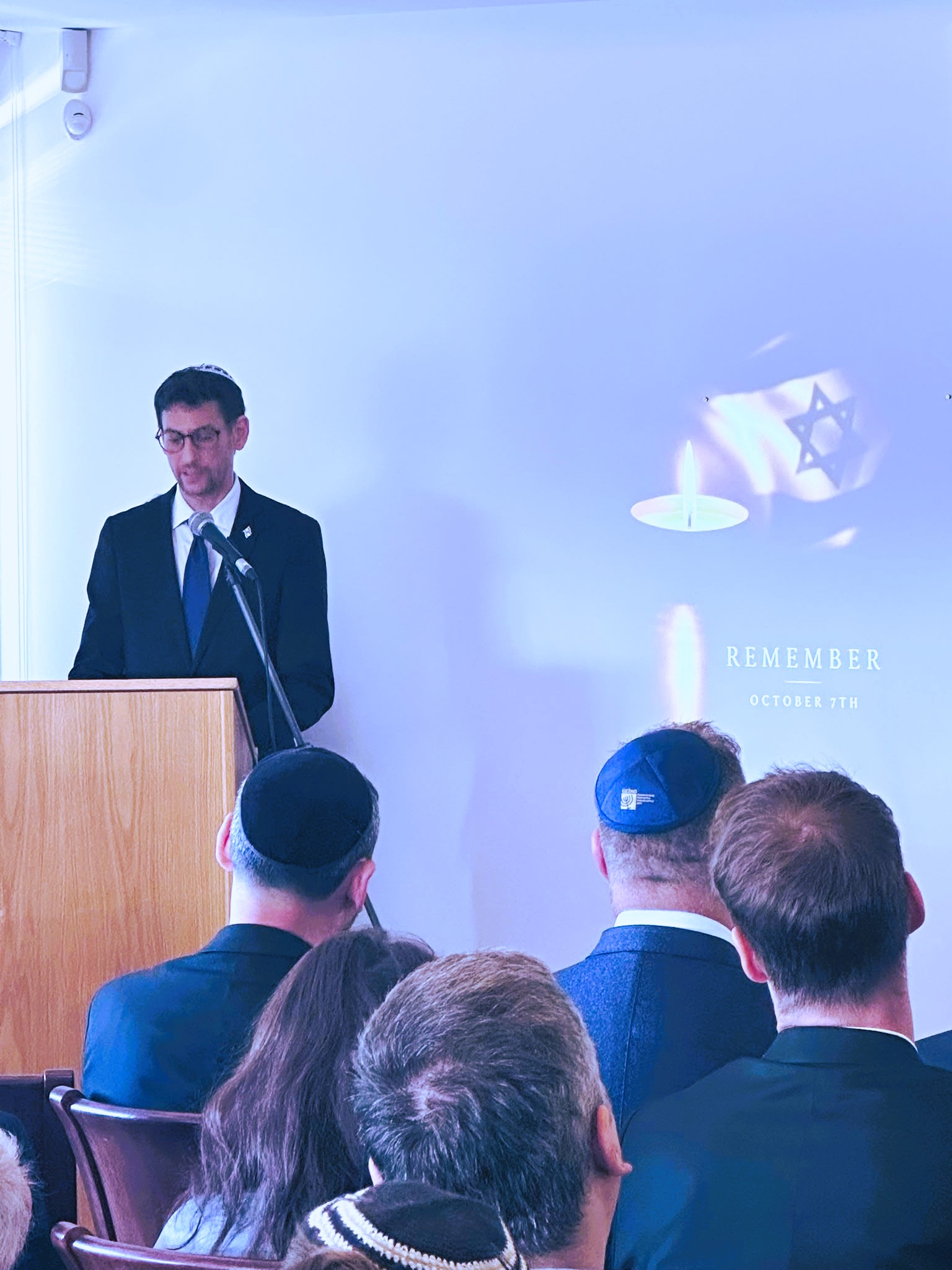
The screen lit up, and the faces began.
Men, women, children. The 1,200 murdered on October 7, 2023 — the day Hamas terrorists broke through Israel’s border and moved from house to house. The deadliest day for Jews since the Holocaust.
◆I sat at the back, the way I usually do. Not modesty. From the back you see the room, and in a room like that, the room is where the truth is.
Nobody wept aloud. Some had tears, held quietly.
◆Three years does not heal this. It only teaches people how to carry it in public.
Then a widow walked to the microphone.
Yana Karim’s husband was Malik Karim, a senior police sergeant and investigator at the Be’er Sheva station, a resident of Dimona. On the morning of October 7, he was working as a security guard at the Nova music festival in Re’im.
When the attack began, he did not run. He used his personal pistol to block the terrorists and saved many young people before they opened fire on him. He was killed in the fight.
Yana and Malik had built their home together in Dimona. They had two children, Daniel and Anabel.
She told us she would remember him as the man behind the uniform — a father, a husband.
◆She said the word “father” and the room changed. Not the word “hero.” The word “father.” Though he was that, too.
Galina Gitelman opened her shutters that morning and saw terrorists on the rooftops and in the streets, shooting people. She could not believe her own eyes.
◆I have heard many accounts of that day. This one stays with me, because it is the one any of us could have lived. You wake up. You open a window. And the world outside is no longer your world.
After the two women spoke, three candles were lit.
Ambassador Cobi Yanovsky rose to speak. He did not begin with diplomacy. He began with the date.
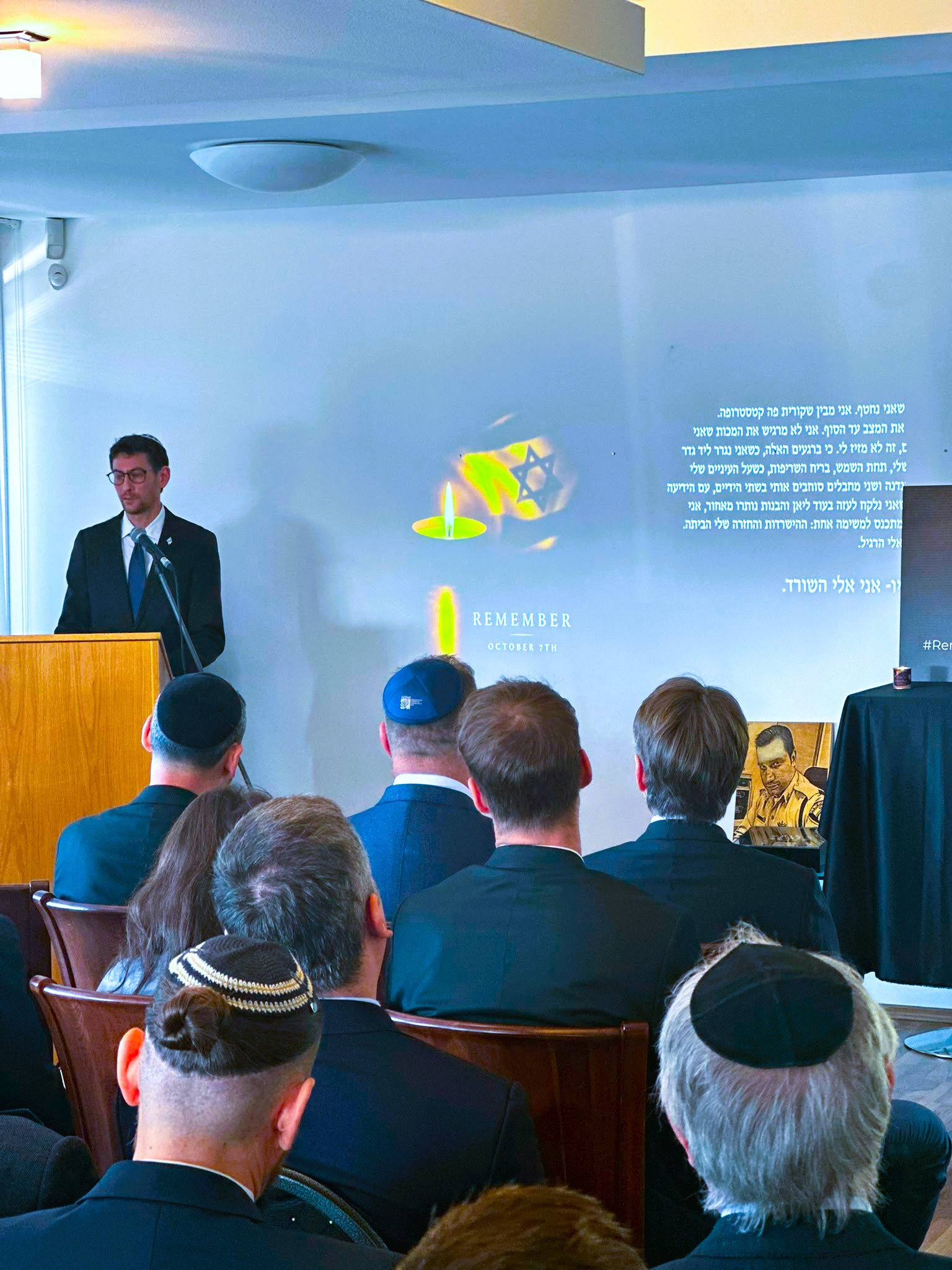
◆Speeches do not bring anyone back. But a speech can do one thing: it can refuse to let a lie stand. That is the only power in the room, and it is not small.
He described what happened in those hours with a precision that left no room for abstraction. Thousands of terrorists broke through the border. Within hours, approximately 1,200 people were killed — “the worst massacre Jews have experienced since the Holocaust.”
Then came the passage that carried the weight of the room.
He spoke of the hundreds of young people at the Nova festival who fled into bushes and found no shelter. Of the more than 2,500 wounded. Of the 251 hostages taken into Gaza — children, the elderly — whose families lived for months between hope and terror.
Then he said the sentence that defined the speech:
An ideology, he said, “that sees human life as a tool, hatred as a value, and death as a goal.”
And then the warning: “Whoever believes that this evil can be contained, without response, makes a mistake that the entire world may pay for.”
◆A diplomat is trained to speak so that nothing can be pinned to him. Yanovsky stood at that podium and spoke as if he wanted to be pinned.
The speech was delivered by a diplomat. Diplomats do not reach for the word monsters — they describe what was done and let the room supply the noun. I am not a diplomat, and I was in that room.
So let us supply it plainly, because three years have earned the right. These were not militants. Not fighters. Not resistance. They slaughtered twelve hundred people in their homes, in their beds, at a festival in an open field.
◆They were monsters. There is no other word that survives contact with the record.
◆I do not say this out of anger. I say it out of accuracy. Anger passes. Accuracy stays.
A speech is heard once, and then it is over. Yanovsky seemed to know that.
◆He did not let us leave with only words.
Every person in that room received a copy of Eli Sharabi’s book, Hostage, in Slovak. A passage was read aloud in Slovak during the ceremony. The book itself went home with us.
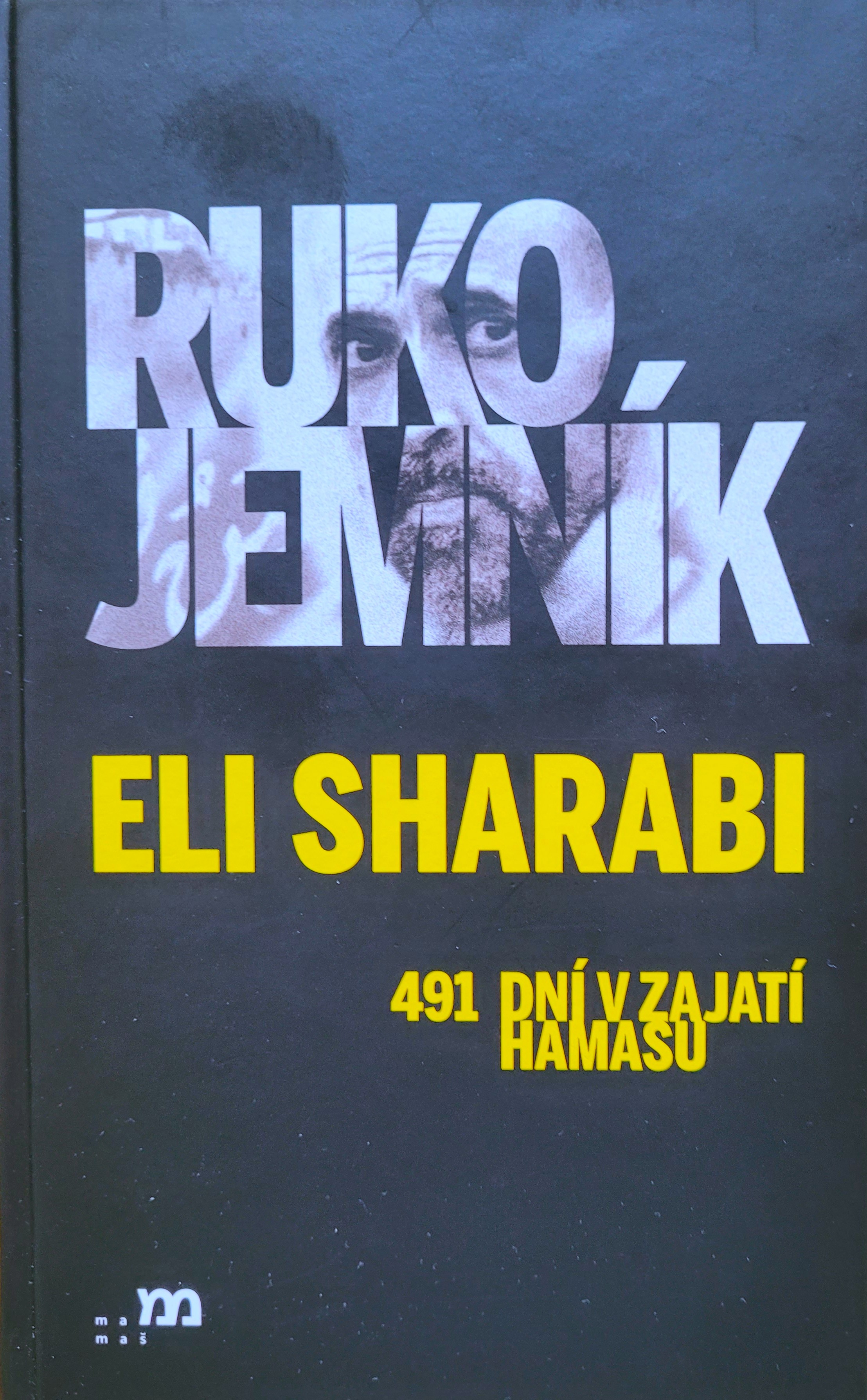
Eli Sharabi, 53, of Kibbutz Be’eri, was abducted from his home on October 7, 2023, and held in Hamas captivity for 491 days. He was released on February 8, 2025. During the attack on Be’eri, his wife Lian and their two daughters, Noa and Yahal, were murdered. His brother Yossi was kidnapped and killed in captivity.
He had chosen to tell his story, Yanovsky said, “without hatred and without exaggeration, in a candor that is hard to deny.”
“When this testimony is in the language of readers here,” the Ambassador said, “it will stand against denial and lies.”
The speech did not end in grief. It ended in resolve — and in a story most of us in that room had not heard.
A week before the ceremony, on a FlyDubai flight from Dubai to Tel Aviv, a terrorist attempted to assassinate passengers and bring down the plane. An Indian captain, severely stabbed, managed to open the cockpit door. Israeli passengers — ordinary people — burst in and stopped the attacker.
He closed with a vow:
The two rabbis led the prayers. They recited El Maleh Rachamim, the prayer for the souls of the dead — for “the holy and the pure, citizens and soldiers, heroes of the IDF and the security forces, who fell and who were murdered in the cruel terror attack and in the battles since Simchat Torah 5784.” Then Kaddish.
Rabbi Baruch Myers and Rabbi Misha Kapustin.
Then the psalm — Esa Einai el he-harim, “I lift my eyes to the mountains” — sung by Ester Trenklerova.
And then Hatikva.
◆We did not leave that room comforted. We left it carrying something.
◆I did not leave that room with an answer. I left with a job. Defend Israel. Never forget. Say what I saw, in a language people can understand, to people who were not there.
◆That is what this ceremony is. Not grief. Not closure. An instruction.
◆Remember. And do not soften it.
◆The screen went dark. The faces did not.