What Is the Real Meaning Behind the Anthem Hatikvah?
Sami Bsoul, PhD
You’ve probably heard "Hatikva" at some point, and maybe you’ve even looked up the translation of it online (though, let’s be honest, the translations out there aren’t always spot on). Well, in this article, I’m going to take you deeper into the real meaning behind "Hatikva" and show you what’s beneath the surface of this
powerful anthem. I’ll break it down, word by word, and verse by verse, walking you through the layers of meaning that make "Hatikva" more than just a national anthem—it’s a symbol, a dream, and a part of the heart of Israel.
If you want to skip to the full translation at the end of the article, you can do so, but I honestly recommend going through all the layers I offer here, so you can see what lies behind each word and verse. This way, you won’t just understand the meaning, but you’ll also easily remember the anthem.
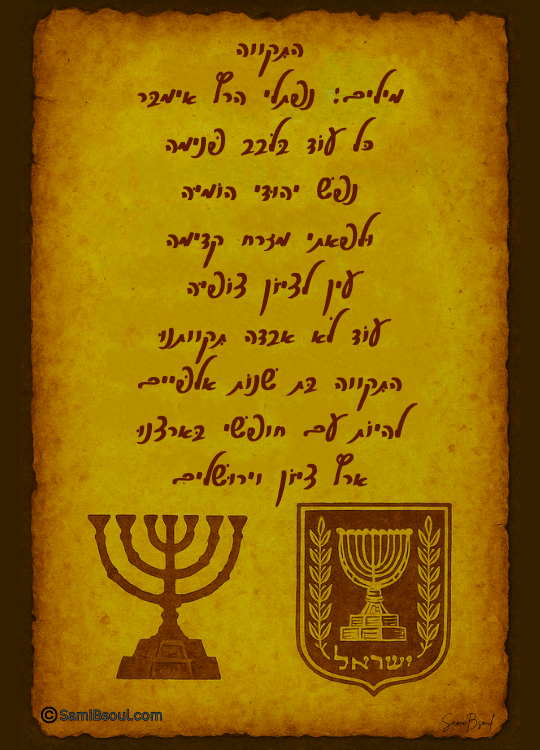
הַתִּקְוָוה
מילים: נַפתָלי הֶרץ אימבֶּר
כָּל עוֹד בַּלֵּבָב פְּנִימָה
נֶפֶשׁ יְהוּדִי הוֹמִיָּה
וּלְפַאֲתֵי מִזְרָח קָדִימָה
עַיִן לְצִיּוֹן צוֹפִיָּה
עוֹד לֹא אָבְדָה תִּקְוָתֵנוּ
הַתִּקְוָה בַּת שְׁנוֹת אַלְפַּיִם
לִהְיוֹת עַם חָפְשִׁי בְּאַרְצֵנוּ
אֶרֶץ צִיּוֹן וִירוּשָׁלַיִם
1. כָּל עוֹד (Kol od)
Hebrew: כָּל (all) + עוֹד (still/yet)
Meaning: "As long as" (temporal condition) (archaic: "Whilst")
Etymology: Biblical Hebrew (e.g., Psalms 104:33)
2. בַּלֵּבָב (Balevav)
Hebrew: בַּ (in) + לֵבָב (heart, poetic form of the word "lev")
Meaning: "In the heart" (inner feeling)
Etymology: לֵבָב appears in poetic texts (e.g., Deuteronomy 6:5)
3. פְּנִימָה (Penima)
Hebrew: פְּנִימִי (inner) + ה (directional suffix)
Meaning: "Deep inside" (inner feeling)
Etymology: From פָּנִים (face/direction= לאן מועדות פניך Where are your steps headed?), suggesting hidden depth.
4. Nefesh Yehudi
Hebrew: נֶפֶשׁ (soul) + יְהוּדִי (Jewish)
Meaning: "Jewish soul" (collective identity)
Etymology: נֶפֶשׁ means life force (Genesis 2:7); יְהוּדִי comes from יְהוּדָה (Judah).
5. הוֹמִיָּה (Homiya)
Hebrew: root ה־מ־ה (to rustle, to desire)
Meaning: "Desires" or "beats" (intense emotional longing)
Etymology: Rare; appears in Jeremiah 31:20.
6. וּלְפַאֲתֵי מִזְרָח (Ulph'atei Mizrach)
Hebrew: וּ (and) + לְ (to) + פַּאֲתֵי (edges/regions) + מִזְרָח (east)
Meaning: "And to the eastern regions" (directional expression)
Etymology: פַּאֲתֵי comes from the word פִּנָּה (corner); מִזְרָח refers to the place where "the sun rises."
7. עַיִן לְצִיּוֹן צוֹפִיָּה (Ayin leTzion Tsofiya)
Hebrew: עַיִן (eye) + לְ (to) + צִיּוֹן (Zion) + צוֹפִיָּה (looks, observes)
Meaning: "The eye gazes at Zion" (desire for return)
Etymology: צוֹפִיָּה comes from the verb צָפָה (to look, to watch), as in Isaiah 21:6.
8. עוֹד לֹא אָבְדָה תִּקְוָתֵנוּ (Od lo avda tikvateinu)
Hebrew: עוֹד (still) + לֹא (not) + אָבְדָה (lost) + תִּקְוָתֵנוּ (our hope)
Meaning: "Our hope is not lost yet" (perseverance)
Etymology: אָבַד = to perish, to be lost; תִּקְוָה = hope, from the root קָוָה (to wait, to hope – Jeremiah 14:22)
9. הַתִּקְוָה בַּת שְׁנוֹת אַלְפַּיִם (Hatikva bat shnot alpayim)
Hebrew: הַ (the) + תִּקְוָה (hope) + בַּת (daughter) + שְׁנוֹת (years) + אַלְפַּיִם (two thousand)
Meaning: "Two thousand-year-old hope" (ancient longing)
Etymology: Poetic personification – "daughter of time," where "bat" (daughter) + "shnot" (years) is used to indicate the age, similar to how one would say "ben shana" or "bat shana" (age of [X] years).
10. לִהְיוֹת עַם חָפְשִׁי בְּאַרְצֵנוּ (Lihyot am chofshi b’arceinu)
Hebrew: לִהְיוֹת (to be) + עַם (nation) + חָפְשִׁי (free) + בְּ (in) + אַרְצֵנוּ (our land)
Meaning: "To be a free nation in our land" (a fundamental desire)
Etymology: חָפְשִׁי from חֹפֶשׁ (Exodus 21:2); אֶרֶץ (land, Genesis 12:1)
11. אֶרֶץ צִיּוֹן וִירוּשָׁלַיִם (Eretz Tzion viYerushalayim)
Hebrew: אֶרֶץ (land) + צִיּוֹן (Zion) + וִ (and) + יְרוּשָׁלַיִם (Jerusalem)
Meaning: "The land of Zion and Jerusalem" (geographical destination)
Etymology: צִיּוֹן is a poetic name for Jerusalem (Psalms 137:1)
Syntax:
|
פְּסוּקִית הַתְּנַאי Conditional clause |
תֵּאוּר זְמַן Time reference |
נָשׂוּא predicate |
נוֹשֵׂא Subject
|
פְּסוּקִית הַלְּוַאי "A wishful verse" (expressing a desired outcome) |
|
|
|
תְּמוּרָה Substitute |
||||
|
כָּל עוֹד בַּלֵּבָב פְּנִימָה נֶפֶשׁ יְהוּדִי הוֹמִיָּה, |
עוֹד לֹא |
אָבְדָה |
תִּקְוָתֵנוּ |
הַתִּקְוָה בַּת שְׁנוֹת אַלְפַּיִם, |
לִהְיוֹת עַם חָפְשִׁי בְּאַרְצֵנוּ, אֶרֶץ צִיּוֹן וִירוּשָׁלַיִם. |
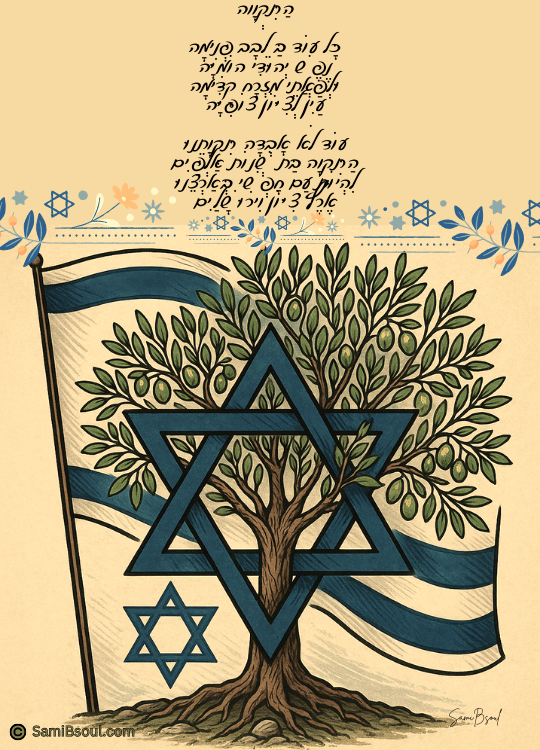
As long as Deep in the Heart
The Jewish soul beats1,
And to the eastern corners (forward to the East)2,
The eye turns toward Zion –
Our hope has not yet vanished,
It is two thousand years of hope:
To be a free nation in our land,
In the land of Zion and Jerusalem.
1"Beats" (for הוֹמִיָּה) – more literal than "yearns," but captures the pulsating hope.
2"To the eastern corners" – for לְפַאֲתֵי מִזְרָח (more elevated than "to the east").
Key words
תִּקְוָה (Tikvah) = Faith that something we desire will happen. Desire, passion
Hope = belief that something we long for will happen; desire, passion.
כָּל עוֹד (Kol od) = כָּל זְמַן שׁ
As long as; for as long as...
לֵבָב (Levav) = רֶגֶשׁ, אֶמְצַע, מֶרְכָּז
Heart = feeling, center, core.
פְּנִימָה (Penimah) = בִּפְנִים הַהֶפֶךְ מ חוֹצֶה
Inside = the inner self, the opposite of the outside.
נֶפֶשׁ (Nefesh) = כִּנּוּי לַ־(א) בֵּנִי אָדָם, (ב) בַּעֲלִי־חַיִּים אוֹ (ג) הַחַיִּים שֶׁל אָדָם אוֹ חַיָּה
Soul = a term for (a) humans, (b) living beings, or (c) the life of a person or animal.
הוֹמֶה (Homeh) = מִשְׁתּוֹקֵק, עוֹרֵג
Longing, yearning
פַּאֲתֵי (Patei) = צוּרַת רִבּוּי נִסְמָךְ מְיֻחֶדֶת שֶׁל פֵּאָה: הוּא גָּר בפַאתֵי הָעִיר, רָחוֹק מֵהַמֶּרְכָּז
Edges (e.g. of a city) – A special form of an attached noun in the plural: He lives on the outskirts of the city, far from the center. He lives on the outskirts of the city, far from the center
קָדִימָה = בכיווּן לפָנים -הַמִּלָּה מְשַׁמֶּשֶׁת כִּקְרִיאַת עידוּד להִתקַדֵם
Forward = in the direction ahead; the word is used as a call to progress.
עַיִן = דָבָר הנִראֶה לעַיִן
Eye = something visible to the eye.
צִיּוֹן = הַמָּקוֹר לַשֵּׁם צִיּוֹן מַגִּיעַ מֵהַתָּנָ"ךְ...
Cion = biblický názov pre Jeruzalem, používaný aj ako synonymum pre Izrael
צוֹפֶה = מִסתַכּל, מַבּיט, מַשְׁקִיף - בּעיקר ממֶרחק
Observer = looks, watches, especially from a distance.
עוֹד לֹא = עֲדַיִן לֹא
Not yet.
לְאַבֵּד = הִפְסִיק לְהַחֲזִיק בְּמַשֶּׁהוּ
To lose = to stop holding onto something.
אַלְפַּיִם = 2000 שְׁנוֹת גָּלוּת...
Two thousand = 2000 years of Jewish exile and history from the destruction of the Second Temple until today.
חָפְשִׁי = בֶּן-חֹרִין, מְשֻׁחְרָר. חֹפֶשׁ = חֵרוּת
Free = liberated, independent; freedom = independence.
© All rights reserved Sami Bsoul
© Všetky práva vyhradené Sami Bsoul